Saturday, 2 November 2013

Berubat dengan Sholat

"Wahai orang yang beriman, jadikanlah sabar dan solat sebagai penolongmu" (Surah Al Baqarah: Ayat 153)
Penyakit Hati:
Penyakit hati terbahagi kepada 2 iaitu penyakit subhat (ragu-ragu) dan syahwat.
Dijelaskan Allah dalam surah Al Ahzab, ayat 32,
Mengenai penyakit Subhat Allah berfirman:
" Dalam hati manusia ada penyakit, lalu ditambah Allah penyakitnya..
Surah Al Baqarah ayat 10, dan penyakit syahwat, Allah berkata, "Wahai isteri-isteri Nabi, kamu sekalian tidaklah seperti wanita yang lain, jika kamu bertakwa maka janganlah kamu tunduk dalam berbicara berkeinginanlah orang yang ada penyakit dalam hatinya..
Antara penyakit hati adalah iri hati, ghibah, riyak, sombong, menyebarkan fitnah, berkata kesat dan sebagainya.
Manakala penyakit kedua ialah penyakit jasmani.
Allah berfirman:
"Tidak ada halangan bagi orang buta, tidak pula bagi orang tempang, tidak pula bagi orang sakit..
(Surah An-Nur, ayat 61)

"Jika Allah menghendaki kebaikan kepada seseorang maka dia kan memberinya ujian" (Bukhari)
"Sungguh menakjubkan keadaan sorang yang beriman, semua urusannya adalah baik. Jika mendapat kebahgiaan ia bersyukur, maka sukur itu menjadi kebaikan baginya. Demikian pula, apabila ditimpa kesusahan ia bersabar, maka sabarnya menjadi kebahagiaan baginya. (Muslimin)
"Sesungguhnya Aku menurunkan penyakit dan ubat serta menjadikan setiap penyakit ada ubat serta menjadikan setiap penyakit ada ubatnya. Maka berubatlah kamu semua dan janganlah berubat dengan benda yang haram" (Abu Daud)
" Tidak ada yang menghindari qadak (ketetapan Allah) kecuali doa dan tidak boleh menambah umur kecuali kebaikan. (Tirmidzi)

"Ya Allah, selamatkan tubuhku dari daripada penyakit dan yang tidak aku inginkan, Ya Allah selamatkan pendengaranku daripada penyakit dan maksiat atau perkara yang tidak aku inginkan.  Ya Allah, selamatkan penglihatanku" (Abu Daud)

Antara cara-cara penyembuhan adalah berserah kepada Allah, berdoa bersunguh-sungguh, ruqya syariyya, solat waktu malam, sedekah, minim madu, habbatus sauda' dan air zam-zam serta ubat-ubatan moden.

Monday, 7 October 2013

The Forgotten Blessing: Giving Your Parents the Proper Treatment They Deserve


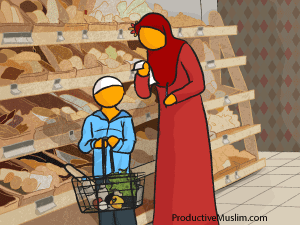
The Forgotten Blessing: Giving Your Parents the Proper Treatment They Deserve“Ali, please come downstairs and eat”, calls Haleema, his mother, for the third time. “In a minute MUM, I’m busy, you’re so difficult.. gosh.. just leave me alone!” followed with a loud slam of the door.
How many of us are guilty of this? It may not be the exact same words, but in some way we have all disrespected our parents, which they certainly do not deserve. Today’s youth have lost respect for their parents who worked so hard to raise them. It has become the “norm” to scream at our mothers. We make derogatory remarks and sometimes pretend like we cannot hear what they’re saying.
Just take a second to step back and reflect: the one who taught you how to walk, eat, speak – you consciously CHOOSE to ignore her?
Yet a mother’s unconditional love is like no other. No matter what her daughter or son says, she will call again. Do you know why? Not because she’s your enemy and out to “get you” or because she’s purposely trying to annoy you. It’s because she genuinely cares. She cares a whole lot, more than anyone will ever care.
When you were younger, she went hungry so you could have a full stomach. She didn’t buy anything for herself so she could spend on your toys, just to see you smile. She nursed you when you were ill, she took every blame for you to hide your faults. So why do you suddenly act like YOU are doing HER a favour by just standing in her existence? Seriously, are you for real?

Paradise is at the Feet of Mothers

You should instead be treating her like a queen and “kiss the very ground she walks on” for all the favours she’s done for you.
Subhan Allah – I don’t want to sugarcoat the reality because I’ve seen this happen with my own eyes, so don’t take offence to what I say. Unfortunately the truth is more bitter than it’s ever been. I’ve witnessed it – the endless worry and care of mothers for their children and the children’s utter disrespect and disregard for their mothers because, “It’s different now!” and “Ugh, you’ll never understand me”.
Why? Because they were never young so they obviously won’t “get you”?
This injustice is done not only to mothers but fathers too. Sometimes children become so arrogant and enveloped in their selfishness that when their parents speak to them in their native language they cleverly reply with English slang terms in attempt to humiliate their parents. I ask you today to contemplate on this. With the high status Allah (glorified and exalted be He) has given to our parents, do we even pay them an ounce of the value they are worthy of?

Here’s What You Need to Stop Doing

  1. Stop raising your voice
    “Say not to them [so much as], ‘uff,’” [Qur'an: Chapter 17, Verse 23]. What a profound statement from the Qur’an. We should not even sigh heavily, let alone raise our voices. When your parents raise their voice at you, 9 out of 10 times they have a very good reason to do so. Don’t let shaytan fuel your anger and ego, causing you to react totally inappropriately. Stop, listen, agree and apologise – thereafter rectify your mistake, even if you think you’re right and they’re being unjust.
  2. Stop ignoring them
    So you’re out with your friends and suddenly you see a call from “Home”. Automatically you dismiss the call. Why? Don’t want to disturb the good time you’re having with your friends, or are you embarrassed to speak to your mum and dad?Remember when you were five years old, and you decided to throw a tantrum in the middle of a supermarket? Don’t you think you embarrassed your mum then? She didn’t decide to abandon you, did she? Because at the end of the day, you’re her child and no matter what you do, she will never ever be embarrassed of you. You owe a hell of a lot to your parents.So pick up that call, and politely answer their questions. Better yet, call them a few times while you’re out. It won’t kill you – you have countless minutes to spend on your friends. So spare a few minutes on your parents and spare them imagining all sorts of horrific scenarios in their minds when you don’t pick up!
  3. Stop thinking you’re always right
    This, for me, is one of the most loathed characteristics. Think about it logically – how much worldly experience do your parents have compared to you? Making sense yet? When discussing things with parents, remember never to reject their opinions. Believe it or not, they were young once and also made mistakes, probably the same mistake you’re about to make now, which is why they are advising against it.As the Romanian proverb goes, “Only the foolish learn from experience; the wise learn from the experience of others.” So take advantage of their knowledge, experience and wisdom that you haven’t developed yet. So next time, instead of rolling your eyes and saying, “Yeah yeah, whatever”, listen – really listen. Take it in and act upon it. You can thank them in the process too.

Here’s What You Need to Start Doing

  1. Start showing some gratitude
    This follows on from my last point. It won’t harm you to express a word of gratitude once in a while. After all, they did clean your nappies. Parents have “bad” days too, they’re human too. And they need someone to brighten up their day at times. So be that ray of light at the end of a long day. Say “thank you”, make them smile, hug them, buy them a gift.Do this randomly and they’ll be so pleasantly surprised that the smile you put on their face won’t disappear for a long time. It’s not easy being a parent, and sometimes you think you’ve done it all wrong. By expressing some love, they’ll be reassured that they must have done something right for you to behave in such a way.
  2. Start going out of your way to please them
    If anyone on earth deserves this, it’s them. Not your friends or even your spouse, it’s your parents. Allah (glorified and exalted be He) has granted them such a high position; how can you treat them any less? Offer to help out in any way possible. Do extra tasks, massage their feet, drive them around whenever they need, help with the cooking, anything and everything which you would never do for anyone else and have to make an extra effort to do – DO IT.
  3. Start making sincere dua for them
    Every child knows that their parents mention them in every dua. Your parents wish nothing but well for you. They pray for your success. It’s time for you to replicate the favour. Pray for their wellbeing, pray for their forgiveness, pray for Jannah for them, and most importantly thank Allah (glorified and exalted be He) for them. Make this a habit in every salah. Before you mention yourself, mention them.

Make Your Parents Proud

Evidently these points are general and there are loads more that could be mentioned, but I’ve just listed the things I have personally observed to be an issue. At the end of the day, pleasing your parents will please Allah (glorified and exalted be He), there is no one on earth who deserves your mercy and compassion more than your parents.
Do them proud. If they’re happy, you’ll also be happy, and by treating them well you increase your good deeds. Lastly, never ever disrespect them. On that note, I leave you with this verse from the Qur’an:
“And your Lord has decreed that you not worship except Him, and to parents, good treatment. Whether one or both of them reach old age [while] with you, say not to them [so much as], ‘uff,’ [i.e., an expression of irritation or disapproval] and do not repel them but speak to them a noble word. And lower to them the wing of humility out of mercy and say, ‘My Lord, have mercy upon them as they brought me up [when I was] small.’” [Qur'an: Chapter 17, Verses 23-24]
May Allah (glorified and exalted be He) allow us to be kind, compassionate and caring towards our parents and earn their love, not their anger.
Share your thoughts in the Comments section below!

Saturday, 5 October 2013

abu productive send me..

Assalamu'alaikum Noridah,
Last week we spoke about the importance of having lists, deciding on what to tackle on that list, and then taking action.
The common response I get to these tips are: "Yeah, that's great if you're working on your own and no one's there to disturb you. How are you supposed to be productive when you have people constantly coming to talk to you, your phone never stops ringing and your boss calls you over every 30 minutes to give you a new task?!"
It's true that - sadly - the modern office environment has become a minefield of distractions! You simply can't shut yourself away from it completely. However, there are a few techniques to help you. Here are some:
1. Be an early riser: If you're able to get to work early, this could be your best time to get quality work done and get ahead of the game before distractions start pouring in and derail you from your work. Of course, you have to be disciplined with yourself and not waste these early hours checking e-mails or surfing the net; make them truly productive hours.
2. Stop ALL *optional* notifications: There are some notifications that you can't turn off (e.g., your office ringing, or your boss calling you!). However, there are a lot of optional notifications that you can turn off, e.g., alerts from your mobile phone, notifications on your desktop computer, etc. Turn these off! They'll reduce the urge for you to stop your work and go check the latest e-mail. Which reminds me...
3. Don't check e-mail ALL the time: The world won't stop if you don't check your e-mails. Trust me. I tried it. Things will move on. So don't be obsessed about checking your latest e-mails every 5 minutes. Check e-mails at certain reasonable intervals (e.g., every hour or 2 hours, etc.).
4. Ask your colleagues/boss for some quiet time: Sometimes simply asking your colleagues/boss to leave you alone a bit to focus on an important piece of work can work. You'll never know till you ask. Make it a regular habit (every morning from 8am - 10am, you'll be working on a particular project and need your colleagues/boss to understand to give you some quiet time to get the work done).
5. Work in Pomodoro sessions: I've spoken about Pomodoro technique before, the technique where you work on a single task for 25 minutes then take 5 minutes break. You can use this at work as well. During those 25 minutes, you can close your door (if you have an office) or put up a sign saying you're busy for 25 minutes, close all notifications, unplug the phone if you have to and simply sit down and get work done.
A lot of times we tend to invite the distractions in our lives without us knowing, then we blame everyone when we're not focussed or when we're distracted. It's time that you take ownership of your focus and career and not let the distractions around you stop you from being productive.
Sincerely,
Abu Productive

7 tips for an amazing wudoo!

7-steps-wudu


Is wudoo for you just a quick wash before prayer? Then it’s time to learn about the amazing benefits of this productivity booster in this life and the next. Let’s find out how you can perform your next wudoo with a deep love insha’Allah!
Allah ‘azza wajal says in this week’s central ayah, which has a tremendous influence on our life multiple times a day: O you who believe! when you prepare for prayer, wash your faces, and your hands (and arms) to the elbows, rub your heads (with water) and (wash) your feet to the ankles..(Quran, 5:6)

Here’s a selection of 7 benefits of making wudoo linked to being more productive:

Do wudoo:
For forgiveness.
Sins weigh you down. They make your heart feel heavy and press your spiritual productivity. Doing wudoo is an ultimate way for forgiveness so your spiritual productivity increases again! The Prophet salallahu’ alayhi wa sallam said: When a Muslim servant or a believer washes his face (in the course of wudoo) every sin he has committed with his eyes is washed away from his face along with the water, or with the last drop of water; when he washes his hands, every sin they wrought is erased from his hands with the water, or with the last drop of water; and when he washes his feet, every sin towards which his feet walked is washed away with water, or with the last drop of water, with the result that he comes out cleansed of all sins.[Muslim] Action: pay attention to every single step of your wudoo and do not rush or neglect any body part by reminding yourself of this immense reward!
To have a blessed sleep.
Imagine an angel staying very close to you all night long and not only that, imagine that angel begging Allah ‘azza wajal to forgive you! This is what happens when you make wudoo before you go to sleep, what a blessing. You can even sleep in a productive way. The Prophet salallahu ‘alayhi wa sallam said: Purify these bodies and Allah will purify you. Whenever a slave sleeps in a state of purification, an angel sleeps within his hair and he does not turn over during the night except that he [the angel] says: ‘O Allah, forgive Your slave, for he went to sleep purified. [Tabarani] Action: Next time when you feel tired or sleepy, push yourself by thinking about this hadith!
For anger management.
Anger is one of the true productivity-killers, how many decisions you made in a moment of anger were good for you? Saying things in anger is one of the reasons many friendships and even marriages get damaged, there was a reason the sahaaba would fear their own tongues. Doing wudoo is a very underestimated weapon from the sunnah. The Prophet salallah ‘alayhi wa sallam said: Anger comes from the devil, the devil was created of fire, and fire is extinguished only with water; so when one of you becomes angry, he should perform ablution. [Sunan Abu Dawood] Action: We all know we should, but who of us really makes wudoo when we are angry. At least try it once next time and see the difference!
For radiance.
Do you know how your beloved Prophet salallahu ‘alayhi wa sallam will be able to recognize you as being one of his followers on the Day of Judgement? The Prophet said: On the Day of Resurrection, my followers will be called “Al-Ghurr-ul-Muhajjalun” from the trace of ablution and whoever can increase the area of his radiance should do so (by performing ablution regularly). [Al-Bukharee] Action: do your wudoo properly and increase the times you do wudoo!
To elevate your ranks in Paradise.
The Prophet salallahu ‘alayhi wa sallam said: Shall I not tell you something by which Allah effaces the sins and elevates ranks?” The Companions said; “Certainly, O Messenger of Allah.” He said, “Performing the wudoo thoroughly in spite of difficult circumstances..[Muslim] Action: So next time when it is very cold, remember this enormous reward for that little bit of hardship.
To have your past sins forgiven.
There is a beautiful sunnah many of us have forgotten. Let’s revive it and earn lots of hasanaat (rewards) insha’Allah! The Prophet salallahu ‘alayhi wa sallam said: If anyone performs ablution like that of mine and offers a two-rak’at prayer during which he does not think of anything else then his past sins will be forgiven.[ Al-Bukharee] Action: pray two voluntary rakaat after your wudoo and inspire others to!
For Allah subhanahu wa ta’alaa alone.
Your intention of doing wudoo is very important (however, you don’t have to pronounce your intention out loud). Many people say my intention to do wudoo is for prayer, your intention is to do wudoo to please Allah ‘azza wajal.
Action: according to the sunnah, say bismillaah (In the Name of Allah) before wudoo.
Know that wudoo is an act of worship and we can not take away or change anything about the way an act of worship is done. The Prophet salallahu ‘alayhi wa sallam did not make any dua’s (supplications) during the wudoo.
To purify yourself with less!
Let’s be honest; how much water do you use (or actually waste) while doing wudoo? Anas radiyallahu ‘anhu said: The Prophet salallahu ‘alayhi wa sallam used to make wudoo with a mudd of water..[Muslim and others] A mudd is approx the amount of water which is held by the two hands cupped together!
Action: use a bowl to do wudoo from instead of a running tap!
Homework:
For a productive wudoo memorize and reflect (!) upon these two sunnah supplications to say after wudoo:
Ash-hadu an laa illaa illaa-llaahu wahdahu laa shareeka lah wa ash-hadu anna muhammadan ‘abduhu wa rasooluh.
I bear witness that (there is) no god except Allah. He is alone; there is no partner to Him. And I bear witness that Muhammad (is) His slave and Messenger.
Reflection point: Recite this keeping in mind the dangerous consuqences of shirk. Allah made us and we are for Him. He owns us and everything else. We are all slaves of Allah and should live like a true slaves.
Allahumma aj’alnee minat-tawwaabeen waj’alnee minal mutatah-hireen.
O Allah! Make me from among those who repent and make me from among those who purify themselves.
Reflection point: We humans commit mistakes again and aigain, We don’t do many things that we are supposed to do and if we do them, we don’t do them properly. Therefore we need to repent again and again. O Allah! Make us pure in our beliefs, thoughts, body, clothes and places!
*From Understand Quran 50% course.
Check here for a preview: http://understandquran.com/courses/short-course-1.html
Praying you will benefit,
Khawlah bint Yahya ~ United Kingdom
As a reminder:
Narrated ‘Ata’ bin Yasar: Ibn ‘Abbas performed ablution and washed his face (in the following way): He ladled out a handful of water, rinsed his mouth and washed his nose with it by putting in water and then blowing it out. He then, took another handful (of water) and did like this (gesturing) joining both hands, and washed his face, took another handful of water and washed his right forearm. He again took another handful of water and washed his left forearm, and passed wet hands over his head and took another handful of water and poured it over his right foot (up to his ankles) and washed it thoroughly and similarly took another handful of water and washed thoroughly his left foot (up to the ankles) and said, “I saw Allah’s Apostle performing ablution in this way.” [Saheeh Al-Bukharee]

Wednesday, 2 October 2013

10 Nifty Ways To Prolong Your Visitor's Stay..

Today's feature article is:

10 Nifty Ways To Prolong Your Visitor's Stay

Read it below!

10 Nifty Ways To Prolong Your Visitor's Stay
Copyright © Stone Evans, The Home Biz Guy
http://www.PlugInProfitSite.com/main-34306

1. Offer a free ebook that's published right on your
web site. They would have to stay at your web site
to read it.

2. Give your visitors a different free bonus for each
link they click-through on your web site. Example:
"If you click on this link you'll get a FREE course!"

3. Make your content into a story format. They will
want to keep reading to find out what happens at
the end of the story.

4. Offer a search option on your web site. People
will stay longer because it gives them the option of
searching through your web site using keywords.

5. Provide a chat room on your web site. They will
want to chat with other people that are interested in
the subject.

6. Write your content so it attracts their five senses.
Use plenty of adjectives. The will stay focused on
your web site and block out other distractions.

7. Add a "FAQ - Frequently Ask Questions" part
on your web site. People won't email you a question
and leave. They will stay to find out the answer.

8. Offer easy navigation. People will leave quicker
if they have a hard time finding what they're looking
for. Don't get them lost or they will leave.

9. Give them plenty of things to do at your web site.
Allow them to submit classified ads, play interactive
games, add their link, sign your guest book, etc.

10. Offer free online tools they can use right at your
web site. It could be a search engine submitter, ad
or letter templates, ebook compiler, etc.

About the Author:
------------------------------
------------------------------
Stone Evans, The Home Biz Guy has helped thousands of people
in over 200 countries around the world start and run a
successful home business. Discover 3 easy steps to start
your own home business and subscribe to The Home Biz Guy's
Free Home Business Secrets Mini-Course at:
http://www.PlugInProfitSite.com/main-34306
------------------------------------------------------------

Quote of the Day:

"To fear love is to fear life." -- Bertrand Russell

Friday, 27 September 2013

Balasan sikufr

Danish blasphemer burns to death

http://images.bt.dk/node-images/198/608x403-c/198138-kurt-westergaard.jpg

In an investigative report, an Arabic newspaper, published from Saudi Arabia, has claimed that Kurt Westergaard, Danish cartoonist, has died in a fire incident.

*Update: International press has not confirmed this report.

KURT WESTERGAARD From Wikipedia.org
Kurt Westergaard is a Danish cartoonist who created the controversial cartoon of the Islamic prophet Muhammad wearing a bomb in his turban. This cartoon was the most contentious of the 12 Jyllands-Posten Muhammad cartoons, which met with strong and sometimes violent reactions from Muslims worldwide. Since the drawing of the cartoon, Westergaard has received several death threats and murder attempts.

There have been several rumors of his death, but none have been confirmed by international press.
The Danish authorities are trying their best to hide his death, who have found no clue about how the fire broke out and why only the room in which blasphemer Kurt was staying had been damaged. The initial investigation shows that the cartoonist, who committed blasphemy by drawing objectionable caricatures of Prophet (Peace be Upon Him), was provided complete security, as he had received many threats from across the globe after the Muslims had been enraged due to the repeated publication of the caricatures in the European press.

 Kurt Westergaard created a controversial cartoon depicting the prophet Muhammad wearing a bomb in his turbanIn February 2008, three Arab nationals were arrested for their alleged involvement in plotting the death of Kurt. A Somali man had also tried to stab him to death but the policemen deputed at his house saved him miraculously.

It is worth recalling that the blasphemous cartoons first appeared in Danish newspaper Jyllands-Posten.

The investigative report says the incident took place some days back in which Westergaard was burnt seriously and died on the spot, but the international media is completely silent about it. The report further claims that some eyewitnesses are also available to testify the happenings. The Danish authorities have so far been unable to find any hint about the cause of fire, as they had started investigations while keeping in mind some external conspiracy to kill the blasphemer.

According to the BBC, a total of twelve persons were involved in the blasphemous act, but all of them, except Kurt, had opted to go underground to escape the public wrath after the Muslims around the world had participated in protest rallies which were attended by millions of people. People in Pakistan had also joined their brethren like those in Indonesia, Bangladesh, India and many Arab countries to register protest against the conspiracy to malign Muslims and their religion. In Lahore and Peshawar, the demonstrators had turned violent and around six persons were killed during the course, while property worth million of rupees was reduced to ashes.

But instead of expressing any remorse, Westergaard went public on many occasions saying he had no regret for committing such a shameful act.

The Saudi newspaper says the death of Kurt shows how powerful Allah Almighty is, as despite the foolproof security arrangements, none was able to save him from his tragic end.

Kurt+Westergaard in Kurt Westergaard Receives M100 Media Award

Mengenali kedai yang pakai ilmu pelaris hitam


Cara Mengenali Perniagaan Yang Menggunakan Pelaris-

Cara mudahnya nak tahu kedai itu ada pelaris (Khadam jin), baca Ayat Qursi 3kali di luar dari kedai. Sebaiknya semasa dalam kereta. Kemudian buka tingkap dan tiup 7x ke arah kedai. Tak perlulah tiup macam bomoh pooh kiri pooh kanan.he..he.. Tiup perlahan-lahan sampai habis nafas(mcm ustaz Ismail Kamus ajar)

Sekiranya ada pelaris di kedai tersebut, “khadam” tu akan marah dan kita akan rasa seperti satu angin menerpa ke muka kita. Kalau dah macam tu, eloklah kita jangan makan dikedai tersebut.

Beberapa cara di bawah bolehlah diamalkan untuk mengelak sihir :-

1) Al-Fatihah.

2) Membaca tiga surah terakhir atau 3 Qul setiap hari.

Ia berdasarkan hadith :

قال لي رسول الله صلى الله عليه وسلم : إقراء قل هو الله أحد , والمعوذتين , حين تمسي و حين تصبح , ثلاث مرات تكفيك من كل شيء ( رواه أبو داود والترمذي )

Ertinya : Baginda S.A.W telah berkata kepadaku : “Bacalah Qul Huwa Allahu Ahad” (al-ikhlas) dan (surah an-Nas) dan (surah al-falaq) sebanyak 3 kali ketika pagi dan petang, ia mampu mencukupkan kamu dari segala sesuatu.( At-Tirmidzi, Bab Doa yang disebut Ketika Ingin Tidur, no 3570 ; Sunan Abu Daud, Bab Apa Yang Dibaca Ketika Subuh, no 5072 ( Nuzhatul Muttaqin, no 1457 , 2/229 ) At-Tirmidzi : Hasan Sohih, An-Nawawi : Sohih.

-M.N
— with Sharifah

My friend post this..

Status Update

1.6: Narrated `Abdullah bin `Abbas (ra): Abu Sufyan bin Harb (ra) informed me that Heraclius had sent a messenger to him while he had been accompanying a caravan from Quraish. They were merchants doing business in Sham (Syria, Palestine, Lebanon and Jordan), at the time when Allah's Apostle had truce with Abu Sufyan and Quraish infidels. So Abu Sufyan and his companions went to Heraclius at Ilya (Jerusalem). Heraclius called them in the court and he had all the senior Roman dignitaries around him. He called for his translator who, translating Heraclius' question said to them, "Who amongst you is closely related to that man who claims to be a Prophet?" Abu Sufyan replied, "I am the nearest relative to him (amongst the group). Heraclius said, "Bring him (Abu Sufyan) close to me and make his companions stand behind him." Abu Sufyan added, Heraclius told his translator to tell my companions that he wanted to put some questions to me regarding that man (The Prophet) and that if I told a lie they (my companions) should contradict me." Abu Sufyan added, "By Allah! Had I not been afraid of my companions labeling me a liar, I would not have spoken the truth about the Prophet. The first question he asked me about him was: 'What is his family status amongst you?' I replied, 'He belongs to a good (noble) family amongst us.' Heraclius further asked, 'Has anybody amongst you ever claimed the same (i.e. to be a Prophet) before him?' I replied, 'No.' He said, 'Was anybody amongst his ancestors a king?' I replied, 'No.' Heraclius asked, 'Do the nobles or the poor follow him?' I replied, 'It is the poor who follow him.' He said, 'Are his followers increasing decreasing (day by day)?' I replied, 'They are increasing.' He then asked, 'Does anybody amongst those who embrace his religion become displeased and renounce the religion afterwards?' I replied, 'No.' Heraclius said, 'Have you ever accused him of telling lies before his claim (to be a Prophet)?' I replied, 'No. ' Heraclius said, 'Does he break his promises?' I replied, 'No. We are at truce with him but we do not know what he will do in it.' I could not find opportunity to say anything against him except that. Heraclius asked, 'Have you ever had a war with him?' I replied, 'Yes.' Then he said, 'What was the outcome of the battles?' I replied, 'Sometimes he was victorious and sometimes we.' Heraclius said, 'What does he order you to do?' I said, 'He tells us to worship Allah and Allah alone and not to worship anything along with Him, and to renounce all that our ancestors had said. He orders us to pray, to speak the truth, to be chaste and to keep good relations with our Kith and kin.' Heraclius asked the translator to convey to me the following, I asked you about his family and your reply was that he belonged to a very noble family. In fact all the Apostles come from noble families amongst their respective peoples. I questioned you whether anybody else amongst you claimed such a thing, your reply was in the negative. If the answer had been in the affirmative, I would have thought that this man was following the previous man's statement. Then I asked you whether anyone of his ancestors was a king. Your reply was in the negative, and if it had been in the affirmative, I would have thought that this man wanted to take back his ancestral kingdom. I further asked whether he was ever accused of telling lies before he said what he said, and your reply was in the negative. So I wondered how a person who does not tell a lie about others could ever tell a lie about Allah. I, then asked you whether the rich people followed him or the poor. You replied that it was the poor who followed him. And in fact all the Apostle have been followed by this very class of people. Then I asked you whether his followers were increasing or decreasing. You replied that they were increasing, and in fact this is the way of true faith, till it is complete in all respects. I further asked you whether there was anybody, who, after embracing his religion, became displeased and discarded his religion. Your reply was in the negative, and in fact this is (the sign of) true faith, when its delight enters the hearts and mixes with them completely. I asked you whether he had ever betrayed. You replied in the negative and likewise the Apostles never betray. Then I asked you what he ordered you to do. You replied that he ordered you to worship Allah and Allah alone and not to worship any thing along with Him and forbade you to worship idols and ordered you to pray, to speak the truth and to be chaste. If what you have said is true, he will very soon occupy this place underneath my feet and I knew it (from the scriptures) that he was going to appear but I did not know that he would be from you, and if I could reach him definitely, I would go immediately to meet him and if I were with him, I would certainly wash his feet.' Heraclius then asked for the letter addressed by Allah's Apostle which was delivered by Dihya to the Governor of Busra, who forwarded it to Heraclius to read. The contents of the letter were as follows: "In the name of Allah the Beneficent, the Merciful (This letter is) from Muhammad the slave of Allah and His Apostle to Heraclius the ruler of Byzantine. Peace be upon him, who follows the right path. Furthermore I invite you to Islam, and if you become a Muslim you will be safe, and Allah will double your reward, and if you reject this invitation of Islam you will be committing a sin by misguiding your Arisiyin (peasants). (And I recite to you Allah's Statement:) 'O people of the scripture! Come to a word common to you and us that we worship none but Allah and that we associate nothing in worship with Him, and that none of us shall take others as Lords beside Allah. Then, if they turn away, say: Bear witness that we are Muslims (those who have surrendered to Allah).' (3:64). Abu Sufyan then added, "When Heraclius had finished his speech and had read the letter, there was a great hue and cry in the Royal Court. So we were turned out of the court. I told my companions that the question of Ibn-Abi-Kabsha (the Prophet Muhammad) has become so prominent that even the King of Bani Al-Asfar (Byzantine) is afraid of him. Then I started to become sure that he (the Prophet) would be the conqueror in the near future till I embraced Islam (i.e. Allah guided me to it). The sub narrator adds, "Ibn An-Natur was the Governor of Ilya' (Jerusalem) and Heraclius was the head of the Christians of Sham. Ibn An-Natur narrates that once while Heraclius was visiting Ilya' (Jerusalem), he got up in the morning with a sad mood. Some of his priests asked him why he was in that mood? Heraclius was a foreteller and an astrologer. He replied, 'At night when I looked at the stars, I saw that the leader of those who practice circumcision had appeared (become the conqueror). Who are they who practice circumcision?' The people replied, 'Except the Jews nobody practices circumcision, so you should not be afraid of them (Jews). 'Just Issue orders to kill every Jew present in the country.' While they were discussing it, a messenger sent by the king of Ghassan to convey the news of Allah's Apostle to Heraclius was brought in. Having heard the news, he (Heraclius) ordered the people to go and see whether the messenger of Ghassan was circumcised. The people, after seeing him, told Heraclius that he was circumcised. Heraclius then asked him about the Arabs. The messenger replied, 'Arabs also practice circumcision.' (After hearing that) Heraclius remarked that sovereignty of the Arabs had appeared. Heraclius then wrote a letter to his friend in Rome who was as good as Heraclius in knowledge. Heraclius then left for Homs. (a town in Syrian and stayed there till he received the reply of his letter from his friend who agreed with him in his opinion about the emergence of the Prophet and the fact that he was a Prophet. On that Heraclius invited all the heads of the Byzantines to assemble in his palace at Homs. When they assembled, he ordered that all the doors of his palace be closed. Then he came out and said, 'O Byzantines! If success is your desire and if you seek right guidance and want your empire to remain then give a pledge of allegiance to this Prophet (i.e. embrace Islam).' (On hearing the views of Heraclius) the people ran towards the gates of the palace like onagers [??] but found the doors closed. Heraclius realized their hatred towards Islam and when he lost the hope of their embracing Islam, he ordered that they should be brought back in audience. (When they returned) he said, 'What already said was just to test the strength of your conviction and I have seen it.' The people prostrated before him and became pleased with him, and this was the end of Heraclius' story (in connection with his faith).

[Hadith Al-Bukhari

Wednesday, 25 September 2013

How To Get An Extra 108,160 Hits A Year


Today's feature article is:

How To Get An Extra 108,160 Hits A Year

Read it below!

How To Get An Extra 108,160 Hits A Year
Copyright © Stone Evans, The Home Biz Guy
http://www.PlugInProfitSite.com/main-34306

Most of you have seen those little award graphics on
web sites. They are given to the web site by another
web site or award association to reward the web site
for a specific reason. They usually link right to the
site that has given the award.

These award sites are drawing tons of traffic to their
own web site. The reason is because all the web sites
who get the awards are linking right back to them by
posting the award on their web site.

What is stopping you from offering other awards to
other web sites? You could design a graphic for the
award. The graphic could include something that will
draw them to your web site. Have an online form at
your web site so other people can enter to qualify
for the award. You then judge all the entrees and
pick a winner. You give them the award graphic with
a link included. They post it on their web site and
now they're linking your web site.

You could offer web site awards for many reasons.
The web site might offer outstanding and original
content. The design of the web site could be very
professional. It could have a fast load time. It could
include original web features that aren't found on
most web sites. The site may be easy to navigate
through.

Let's say you give out 20 web site awards a week.
In a year that would be 1040 people linking to your
web site. If you received 2 hits a week from each
link, that would be 104 hits a year from each award
you have given. That equals an extra 108,160 hits to
your web site a year!


Quote of the Day:

"Friends are treasures." -- Horace Burns

Tuesday, 24 September 2013

And the answer ..Al Hakeem


Name_40_Al-Hakeem
The All-Wise, The Ultimate Ruler and Designer
Hakeem and Haakim come from the root haa-kaaf-meem, which carries three main meanings. The first meaning is to restrict or prevent something or someone. The second main meaning of this root is that of being wise and of knowing the true nature of things. The third is to pass judgement, to decide and put matters in correct places.
This root appears 210 times in the Quran in 13 derived forms. Examples of these forms are yahkumu (will judge), hukman (wisdom, judgement), and al hikmah (the wisdom).
This attribute of Allah shows that He legislates rules to turn mankind from wrongdoing, all His rules are for our own benefit. Al-Hakeem does His work most accurately and perfectly, as He knows how to calculate, measure and design in perfection.
Al-Hakeem Himself says: O Musa! Verily, it is I, Allah, the All-Mighty, the All-Wise. [Quran, 27:9] … Alif Lam Ra: A Book, the Verses thereof are perfected and then elaborated from the Him, Who is All Wise, Well-Acquainted (with all things) [Quran, 11: 1] Falsehood cannot come to it (the Quran) from before it or behind it; (it is) sent down by the All Wise One, the One Worthy of all Praise. [Quran, 41:42]
Knowledge, Power and Wisdom

‘Ilm (knowledge) and hikmah (wisdom) are two separate attributes which have to be linked together for success. Of what benefit is knowledge if you do not use it with wisdom? And how far do you get if you are wise in your ways, but you do not have knowledge? Allah’s name Al-Hakeem is often paired with Al-‘Aleem (The All-Knowing). The other most often repeated couple is Al-Hakeem with Al-‘Azeez (The Most-Powerful). This shows us that Allah ‘azza wajal uses both His knowledge and power in the wisest way to guide us through the life of this world, testing us with tailor-made trials, challenges and opportunities for us to proof our faith in Al-Hakeem.
How Can We Live By This Name?
1.      Trust in Al-Hakeem. If Al-Hakeem decides you should lose or gain something, there is a wisdom behind it. If something happens that displeases you it would be unwise to be unhappy with Al-Hakeem. You lost money, or even a person, or didn’t get what you so badly wanted? How many times in life have you looked back and seen the wisdom behind things that happened to you, things which may have greatly saddened you at the time? Wisdom is to trust the wisdom of Al-Hakeem at all times, no matter how hard it may seem! And Allah is All-Knowing, All Wise. [Quran, 60:10]
2.      Stick to the laws of Al-Hakeem. All the rules of Al-Hakeem (the sharee’ah) are set to reform the creation and not to cause hardship in life. In other words; His rules are best for you. Al-Hakeem made you and thus knows exactly what you need to succeed. If we don’t understand His rulings, we should not blame the rules, but our own understanding. So focus and reflect and know that the ruling only belongs to Al-Hakeem and ask Him to make you of those who value His laws above man-made laws in your daily life.
3. Reflect on the perfection of Al-Hakeem’s work. Remind yourself of Al-Hakeem seeing His wisdom reflected in His creation. The oxygen, the salt levels in your blood are all perfectly measured, if they would be slightly different you would die instantly. Take the time to look around you (and at yourself) and realize the beautiful and perfect wisdom of Al-Hakeem. It is He Who made everything that He has created perfect, and began the creation of man from clay. [Quran, 32:7]
4.      Make the Book of Al-Hakeem your companion. The attribute of hikmah is one you should strive for too. Derive your wisdom from your knowledge of Allah. Where can we find this knowledge? In the Quran and the Sunnah. So make the Quran your close companion, by reciting it, understanding it and acting upon it. Ya Seen. By the Quran, “Al-Hakeem” (i.e. full of wisdom) [Quran, 36: 1] The more you follow the commands of the All-Wise, the wiser you will become!
5 . Have hikmah in your dealings.
Use your blessings with wisdom by using them to gain the pleasure of Al-Hakeem. How many of have wealth but waste it? How many of us have health, but we misuse it? Being wise is using your intelligence, wealth, time, and skills to please Al-Hakeem. The same goes for calling other people to Al-Hakeem— do so with hikmah!

6. Ask Al-Hakeem for understanding.
Of all things you daily ask of Allah, make sure you keep asking Him for understanding of the deen of Islam.
Al-Hakeem says: And whosoever is granted wisdom is indeed granted abundant good. [Quran, 2:269]

Wallahu ta’alaa ‘alem.

O Allah, Al-Hakeem, we know that You are the One who possesses ultimate wisdom. Make us of those who are content with Your decisions. Adorn us with wisdom in dealing with ourselves and others and with spreading Your message. Make us reflect on Your wisdom by looking at creation. Grant us understanding of Your book and guidelines and actions which reflect this understanding. Ameen!
The Understand Quran Academy Team

PS: Have you signed up for our newsletter? Sign up now and receive the free welcome gift to the series The Names of Allah.

How to get valuable feedbak frm yr custumers

How To Get Valuable Feedback From Your Customers


Today's feature article is:

How To Get Valuable Feedback From Your Customers

Read it below!


You can learn many things you didn't know about your
business by getting valuable feedback from your customers.
Your customers may buy your main product just to get the
free gifts. Your visitors may think it's to hard to navigate
through your web site.

By knowing this type of important information you can
improve your web site, products/services, advertising, and
marketing. Below are nine techniques you can use to get
valuable feedback from your customers.

-Use surveys and questionnaires regularly to improve your
business. Publish them on your web site, e-zine, print
newsletter, direct mail material, include them with product
shipments or inside product packages. Post them on
appropriate online message boards, e-mail discussion lists
and newsgroups on the internet.

-Create an online community for your customers. Include a
chat room, message board, e-mail discussion list on your
site for customers to participate in. You can regularly
moderator these communities to see what your customers
are saying about your business.

-Give away your products to a group of your customers.
Ask them to use and review the product. Ask them to fill
out an evaluation form and send it back. Some customers
may fill them out, some may not, but the feedback you do
get will be valuable.

-Offer your web site visitors an online product or service
from your web site at no cost. It could be an ebook, search
engine submission, consulting via e-mail, web design, etc.
In return, ask them to fill out a short survey about your web
site, products or services you're selling, customer service,
or your web site.

-Create a customer focus group. Invite ten to twenty of
your most loyal customers to meet regularly. They will give
you ideas and input on how to improve your customer
service. You could pay them, take them out to dinner or
give them free products.

-Stay in contact with customers on a regular basis. Offer
them a free e-zine subscription. Ask customers if they
want to be updated by e-mail when you make changes to
your Web site. After every sale, follow-up with the
customer to see if they are satisfied with their purchase.

-Make it easy for your customers to contact you. Offer as
many contact methods as possible. Allow customers to
contact you by e-mail. Hyperlink your e-mail address so
customers won't have to type it. Offer toll free numbers
for phone and fax contacts. This will make it easy for your
customers to voice their opinions.

-You could regularly contact customers on birthdays or
holidays. Send thank you gifts to lifetime customers. E-mail
them online greeting cards on holidays or birthdays. Call
them personally to wish them a happy holiday. You could
them follow-up with a survey or ask them if they're happy
with your business.

-Invite your customers to company meetings, luncheons,
workshops or seminars. Create special events for your
customers like parties, barbecue's, dances etc. Make a
point for yourself and your employees to interact with them
at these event to get valuable feedback for your business.

You could use a couple or all of the techniques listed above
to get valuable customer feedback. These aren't the only
ways, be creative and come up with some of your own.
-

Quote of the Day:

"Enjoying the joys of others and suffering with them--these
are the best guides for man." -- Albert Einstein

9 Practical Tips on Giving Da’wah

[Da'wah Series] 9 Practical Tips on Giving Da’wah

[Da'wah Series] 9 Practical Tips on Giving Da’wah - Productive Muslim
Source: AlKauthar.org
We understand that as Muslims, da’wah is an obligation upon us all. In my previous article, I discussed the benefits of giving da’wah. In this article, I will discuss how we can fulfil this important duty. I have listed some points below about how we as productive Muslims can bring this blessed act into our lives.

1. Take a Short Da’wah Course

You can contact a da’wah organisation that can guide you on how to give da’wah to individuals from various backgrounds in a variety of situations. These courses are not particularly time consuming and most organisations will provide it for free as well, so cost is not a problem.
For those based in the UK, I highly recommend IERA, which specialises in offering free and focused training for Muslims in different parts of the UK. It offers sharp techniques that involve using logic, common sense, reasoning and evidence from the Qur’an and authentic hadith.
For my brothers and sisters outside the UK, it is worth spending a few minutes on the Internet researching for organisations in your area or country that offer a similar service. If there really is nothing available, then you can always look for online courses where there is plenty of material accessible.

2. Pass on a CD or Book

This is an easy and effective solution to those who feel they do not have sufficient knowledge or even know where to start when having a conversation about Islam. Giving a CD of an experienced Da’ee (caller to Islam) who is able to break down the fundamentals of Islam in a logical manner may be better for you. Without the necessary skills and application of giving da’wah, we may actually hinder the effort of bringing someone towards Islam and trip ourselves up and more importantly, say something we may regret. If you are worried about this, direct them to someone more knowledgeable. Nevertheless, do not let this put you off from speaking to someone by giving da’wah and telling others about the greatness of Allah (glorified and exalted be He).
Offering a translated copy of the Qur’an is probably the most effective device you can give to someone. You will not find a better read in the world than the Qur’an (and you can tell them that too!).
There may be times when you engage in da’wah using excellent logic and examples, but the other person is just not interested. The Qur’an is very powerful and it will have an effect on a person’s heart and therefore it is something we should not underestimate. Consequently, it is a good idea to let people have a copy of the Qur’an and read at their leisure.

3. Inform Others About an Upcoming Class or Conference

This can be achieved through various means, for example word of mouth. You can tell people, Muslims or non-Muslims, about a local event that is taking place or the upcoming visit of a famous sheikh. This is something that can be done through modern means i.e. reminders sent by text messages, posting information on your Facebook/Twitter account, and any other means which you feel is effective in reaching people.
More traditional methods can be used if you prefer those. For example, you can distribute leaflets to different Islamic centres where they can hand them out to big crowds of people, such as at Jumu’ah prayers. Most large conferences will also have special invites for non-Muslims. Try to encourage a non-Muslim to go along with you by promoting it as a pleasant evening out with plenty of free food available!

4. Look at Improving Your Character

Improving your character would be one of the most effective ways of indirectly giving da’wah. By showing high excellence, manners and conduct at all times, those around you are likely to be drawn to you as a person, and therefore, towards Islam. A person with poor character is not likely to have any credibility, despite you telling them how beautiful and wonderful Islam is. Many rewards of a good character can be acquired not only in this life but more importantly, the next. As the Prophet Muhammad (peace and blessings of Allāh be upon him) said:
“Nothing is heavier on the Scale of Deeds than one’s good manners.” [Tirmidhi]
A tip to help you improve your character is to study the seerah of Prophet Muhammad (peace and blessings of Allāh be upon him), where you will find the best of examples. We can also study the behaviour and mannerisms of the companions (may Allāh have mercy upon them) of the Prophet (peace and blessings of Allāh be upon him), as well as the pious people of the previous generations. It is also worth looking online for lectures regarding improving your character and how significant and pleasing to Allah (glorified and exalted be He) having a good character is. Additionally, we should supplicate to Allah (glorified and exalted be He) to help us work on our weaknesses and to positively develop our character.

5. Arrange to Post Lectures Online/Live Stream from Your Local Islamic Centre

This largely applies to centres that do not already have this facility. You would be able to create a stronger link between the local Islamic centre and the local community by providing materials to those who may not be able to regularly attend gatherings. This is also an effective tool to help prevent you from being of those that withhold knowledge, as the Prophet Muhammad (peace and blessings of Allāh be upon him) said:
“Whoever hides knowledge, Allah will brand him with the branding iron from the hellfire.” [Tirmidhi]
This may take a bit of your time initially, but if there is anything you can think of starting that will benefit the people then, In sha Allah, this will be a sound investment of your time.

6. Engage Yourself in Charity Work

A great benefit of this is that it will count as sadaqah for you In sha Allah. I am sure there are many forms of charity work you can get involved in your local area e.g. the old and disadvantaged, or working with causes supporting the environment, animals, individuals with physical and mental disabilities etc. Taking part in noble causes is also an effective way of helping to remove misconceptions about Islam.
Moreover, this is something that was part of the Prophet Muhammad’s (peace and blessings of Allāh be upon him) life, as he fought for people’s rights before becoming a prophet. This made the acceptance of his message easier among his people as they were well aware of his true nobility, exalted character and mannerisms prior to his message.
People are likely to respond positively to your da’wah and have an open mind about your message. Those witnessing your upright character may become curious about Islam and then research about the teachings of Islam themselves. Finally, getting involved in charity work should provide you with great opportunities within your career and thus providing you with success in this life and the hereafter.

7. Try to Integrate Islam into Your Life as Much as You Can

This means that you live and breathe Islam. So whether you are at the park, in the masjid or workplace, you have a consciousness of Allah (glorified and exalted be He) and what you should and should not be doing. This can be achieved by making sure you maintain the physical appearance of a believer e.g. maintaining a beard, wearing a hijab etc. This is important because how you dress and look will impact greatly on how you feel. Consequently, how you feel will affect your speech and conduct.
Studies have shown that clothing affects how we think about ourselves as well as how others perceive us. If you are in clothing that indicates modesty, the chances are your thoughts and actions will be modest, which can help improve your character.
Having Islam in your life continuously will make it easy for you to do that which is pleasing to Allah (glorified and exalted be He) and consequently, this will impact positively on your character. As a result, you can indirectly give da’wah and help to leave a positive impression of Islam and also remain alert to potential da’wah opportunities.
To practically help you integrate Islam into your daily life at the workplace, for example, is by keeping Islamic material with you at all times such as books or an Islamic calendar that you can keep at your desk and are visible to others. This makes your job of giving da’wah easier, as this allows others to initiate a conversation and ask about Islam. A great advantage of allowing somebody else to start a conversation is you do not have to start the conversation, which can be difficult to do with some people and therefore seen to be simply ‘preaching’. Little things such as these allow opportunities to be created and therefore making the da’wah easier.
Another idea is to bring food into the workplace/class on a special Islamic occasion e.g. Eid. People will naturally ask what the occasion is and therefore create an opportunity to give da’wah. This is a very useful tool as people always respond positively to food!
Furthermore, ensure you are praying in the workplace/class when the time for salah arrives. Try to speak to a manager/senior staff member to arrange for a room where you can pray if there is not already one there and let them know salah is very important to you. By highlighting this, those around you are likely to respect you more In sha Allah and hopefully it will open their hearts to Islam.
Lastly, if you are using public transport, be sure to have reading material with you. You will be using your time productively by seeking knowledge as well as potentially creating a da’wah situation where other passengers may be curious about what you are reading.

8. Obtain a Small Booklet About Common Questions About Islam

If it is not practical for you to attend a da’wah course, then having a booklet is a quick and easy way to know the types of questions running through the minds of non-Muslims about Islam. In sha Allah, this will provide you with confidence and the start-up knowledge in the field of da’wah. You can usually find them from local Islamic centres and also, for those in the UK, IDCI can provide cheap and effective da’wah material to help get you started.

9. Keep it Simple!

If you are speaking to a non-Muslim, try to mention the simplicity of the religion and what it requires to be a Muslim e.g. believing in one God, acknowledging the Qur’an as a direct revelation from God, and recognising Muhammad (glorified and exalted be He) as the Messenger of God.
People may try to ask you lots of questions regarding Islam. For example, “Why does Islam allow such and such?” An effective response is to say, “I can answer that, but you need to understand Islam as a package. So if you have a few minutes I can answer that for you.” This is when you can start giving da’wah about the Creator and the greatness of Allah (glorified and exalted be He) and create the beautiful picture of Islam.
Additionally, this approach applies to Muslims. When giving da’wah, it may suffice to remind others about the greatness of Allah (glorified and exalted be He), His names and attributes and to remind others of His favours and blessings. Keeping a simple approach makes your job easier and helps to avoid conflicts and philosophical debates.
What other effective ways do you know of to give da’wah? What da’wah organisations do you know of that can support our brothers and sisters in giving da’wah? What concerns do you have about giving da’wah? Please share your knowledge in the comments section below so we may inspire each other to take part in this blessed act.

About the Author:
Abu Umar is a student of knowledge trying his hand at writing blogs, looking to spread the message of Islam and its beauty.

Monday, 23 September 2013


Dua for Calamities

 Umm Salama reported Allah's Messenger (may peace be upon him) as saying: If any Muslim who suffers some calamity says, what Allah has commanded him," We belong to Allah and to Him shall we return; O Allah, reward me for my affliction and give me something better than it in exchange for it," Allah will give him something better than it in exchange.

(Muslim)


9 Ways to Stay in Touch with Long-Distance Friends


9 Ways to Stay in Touch with Long-Distance Friends - Productive MuslimLiving in the age of globalisation, I am sure that most of us have at least one friend who lives in a different country, on a different continent or even on the other side of the world. Real friends are rare. The kind that you can talk to about anything, know you can trust, who makes you a better person and brings you closer to Allah (glorified and exalted be He). Therefore, it is really important to keep these friendships alive and genuinely make an effort to do so. The following tips might be just what you need.

Religious Behaviour

1. Be a Good Friend

First, before thinking about how to stay in touch with your friends, work on being a good friend. Be somebody memorable, someone whom others actually want to be around. As a good friend, you should strive towards being trustworthy, honest, supportive, reliable, helpful, kind and understanding. Eventually, that is what you will be remembered for. Work on perfecting each one of these noble qualities In sha Allah.
The Prophet (peace and blessings of Allāh be upon him) said: “The example of a good companion in comparison with a bad one is like that of one who sells musk and the blacksmith. From the first, you would either buy musk or enjoy its good smell, while from the blacksmith you would either get burned or smell a bad scent.” [Bukhari]

2. Make Dua For Each Other

Never underestimate the power of dua. If you know your friends are going through a hard time or has a difficult exam to pass, make dua for them. This way, even though you cannot be with them, at least they are with you in your prayers. Also remember them in your sujood, ask Allah (glorified and exalted be He) to make them righteous Muslims and to make it easy for you to stay in touch with each other.
The Prophet (peace and blessings of Allāh be upon him) said: “The Muslim’s prayer for his absent brother will be answered. There is an angel at his head who, whenever he prays for his brother, says, ‘Amin, and you shall have likewise.” [Ibn Majah]

3. Guide to Righteous Deeds

Inspire your friends to be the best version of themselves that they can be. Be a source of good in your circle of friends and someone that encourages the others to do righteous deeds. Talk to them about how to be productive, how to make the most of their time or suggest to them beneficial Islamic articles, books, websites, lectures and videos. Not only will you get immense reward for doing so, but you are also helping your friends to become better Muslims, which is something they will appreciate you for In sha Allah.
The Prophet (peace and blessings of Allāh be upon him) said: “Whoever guides others to do good will have a reward like that of the person who does the good deed.” [Muslim]

Electronic Communication

4. Call & Text

Call your friends from time to time, or send them a short text message showing them that you think about them even though you are far away from each other. I am not suggesting that you should have two-hour conversations every single day. A simple five-minute call to ask about their day will do In sha Allah.

5. Social Media

Use the Internet to your advantage. Facebook is a really convenient tool to chat with your friends using one-on-one chats or even group chats. You do not have to spend five hours talking to them, just catch up for half an hour. Send them a nice message telling them that you miss them, ask about what is going on in their life or update them on what is going on in yours. Also, if your friends happen to not be on Facebook, there is still the good old e-mail, so no excuses. Try to send them pictures/videos to make them a part of your life and get them involved as much as possible.

6. Skype

Tools like Skype are great because you can actually see the person you are talking to. It is a lot more personal than just writing to them online. Obviously it cannot replace the actual person, but it is as close to talking to them in real life as possible. You can have so-called Skype dates and agree on a fixed time every week/month, depending on how much time you have. Also, when you have many friends you want to keep in touch with, you can talk to multiple friends at the same time. It is more efficient to do it that way instead of doing so separately with every single friend that you have.

Personal Interaction

7. Letters & Cards

There is something very special about a handwritten letter or card and I think everyone that has received either can attest to it. It demonstrates to the person that you sat down and really thought about what to write to him or her. It is beautiful because he or she can reread the letter or card over and over again, and it is something very valuable that your friend will probably keep forever. Also, if there is a special occasion like Eid or a wedding, and you cannot be with them, it is great to say a few nice words in a card. Getting postcards from various places can be exciting as well.

8. Care Packages & Gifts

How about you surprise your friends from time to time by sending them a care package or a simple gift? It does not even have to be for a special occasion; just do it because you are friends and you care about that person. If there is a good Islamic book that you would like them to read, for example, that might not be available in their country, this could be a great gift for them.

9. Visit Each Other

Plan annual get-togethers. Make it a priority to see each other at least once a year. Saving up some money will be necessary for that, so be sure to put aside a certain amount every month. Remember to spend the precious time you have together productively and plan some activities ahead of time if you can.
An important point to remember is that it should not always only be you who is making the extra effort. A friendship is a two-way relationship that consists of giving and receiving. So share this article with your friends who live far away and In sha Allah they will apply some of these tips as well. Distance should not matter if you are true friend. If you genuinely care about a person you can always make time for them


In life, I have made a lot of mistakes and felt a lot of pain. My pain made me stronger and my mistakes made me wiser.
Sometimes, people never get what they deserve because they're too busy holding on to things they're supposed to let go of.

THE PROVIDER AND PROVIDENCE: SETTING THE RIGHT FOCUS

blogproviderandprovidence
By Sumbal Tariq
Every human heart is in need of perfection, and this life is a struggle to attain that perfection. Sooner or later every heart realizes that perfection lies only with Allah (swt). His perfection and His completeness are reflected in His attributes. By pondering the nature of everything provided by Allah (swt), we come to know about His unique attributes. One such blessing provided to us is Al-Quran, which holds many verses reflecting His attributes. I’ve chosen one of the verses of the Holy Quran to help us understand the ultimate perfection— Allah (swt):
Or who is it that could provide for you if He withheld His provision? But they have persisted in insolence and aversion? [Quran, 67:21].
This verse is so deep and profound in its meaning because it holds many attributes of Allah Almighty. Reflecting on this verse helps us understand the following realities:
All power belongs to Allah (swt): This verse reflects that all power is in the hand of Allah (swt). No human being has the power to satisfy your needs or to give you providence like food, shelter, a job, wealth, strength, love, etc. Allah (swt) is the provider of all created things. Understanding this attribute makes our hearts fear Him (swt) alone because it helps us know that Allah (swt) controls all things and that no human being provides us with any good or any harm except by Allah’s will.
If God touches you with affliction, there is none who can remove it but He; and if He wills any good for you, then there is none who can hold back His bounty. He causes it to reach whomever He wills of His servants. He is the All-Forgiving, the All-Compassionate. [Quran, 10:107]
The King of kings has power over all things— when you have a need, ask Him, and fear Him alone.
All blessings belong to Allah: This verse shows that your blessings aren’t your belongings. They’re given you by Allah (swt) alone. This means that the money in your bank accounts, your loved ones, your social status, and your job are all given you by Allah (swt).
This verse grants us the insight that we don’t gain a single material thing on our own or with the help of any human being but it’s Allah who has blessed us with it, and far more than we deserve. You don’t own or get anything except what Allah Almighty provides to you. Understanding this concept eradicates arrogance and pride from the heart and removes the love for material things.
We belong to Allah and to Him we will return. [Quran, 2:156]
Human beings are weak: The third deep concept we get from this verse is that humans are weak and fallible.
You’re trying hard to get it by utilizing all resources and powers at your disposal, but you still don’t get the job. Then you come to know about this attribute of Allah (swt)— that only He provides for you. Even if you get the job, understand that it’s not because of you or your boss or any other resource but rather Allah Almighty who is blessing you.
Similarly, if he withholds a blessing, no human has the power to work against His will. Think for a moment— what if He withholds the air you breathe for few seconds? Is there anyone else who can replace this air for you? Do you have the strength to create air for yourself? You came to know your own weakness and His greatness from the answers of these questions.
And you do not will except that Allah wills. [Quran, 76:30]
Understanding of this verse leads us to set the right focus on the Provider and providence. Don’t starve your heart and soul by running for providence by disobeying the Provider. Instead ask and seek the Provider, and you’ll get the providence.
Sumbal Tariq lives in Islamabad, Pakistan. She did her MBA at International Islamic University Islamabad.

And the Answer is . . . Al-Mujeeb!


Name38AlMujeeb
The One Who Responds, The Answerer of Prayers

Mujeeb comes from the root jeem-waw-baa, which points to three main meanings. The first meaning is to answer, reply, respond, and accept. The second main meaning is to cut, pierce, or penetrate and the third is to have a dialogue or conference.
Al-Mujeeb is the One who answers prayers, responds to needs, and accepts praise. He is the One who penetrates each obstacle in order to respond.
This root appears 43 times in the Quran in five derived forms. Examples of these forms are ujeebu (“I respond”), jaboo (“carved out”), istajaaboo (“respond”) and jawaabaa (“(the) answer”). Al-Mujeeb Himself says: … Indeed, my Lord is near and responsive [Quran, 11:61] and … [We are] the best of responders.[Quran, 37:75]

Responding to Each Request with Ease
The name Al-Mujeeb is related in meaning to Al-Hakeem (The All-Wise), Al-‘Aleem (The All-Knowing), As-Samee’ (The All-Hearing), Al-Baseer (The All-Seeing), Al-Wahhaab (The Giver of Gifts) and Al-Kareem. He responds to our requests in a way that displays His ultimate wisdom and knowledge. While we call out to Him He is All-Hearing and All-Seeing and He often gives us more than we deserve or even ask. He is the Most Generous.
His amazing power and wisdom in responding to our requests is demonstrated in this part of a beautiful hadith qudsi:
. . . O My servants, were the first of you and the last of you, the human of you and the jinn of you to rise up in one place and make a request of Me, and were I to give everyone what he requested, that would not decrease what I have, any more that a needle decreases the sea if put into it.. [Muslim, at-Tirmidhi and Ibn Majah]

How Can You Live By This Name?
1.      Respond to the call of Al-Mujeeb.
Al-Mujeeb says: When my servants ask thee concerning Me I am indeed close (to them); I listen to the prayer of every suppliant when he calls on Me; let them also with a will listen to My call and believe in Me; that they may walk in the right way. (Quran 2:186) Your share in this Name is that you are responsive to the commandments of Al-Mujeeb!

2.      Know the art of asking.
Ask for His forgiveness before you ask for anything, as was the formula of the Prophet Yunus ‘alayhi sallam when he desperately needed his supplication to be answered to be saved from the belly of the whale. Ask Al-Mujeeb for everything (halal) you wish in the Hereafter but also in this world. He loves it that you ask Him for everything you need in your deen and dunya (worldy matters). Ask him for clothing, a house to live in, food, drink, guidance, success etc.

3.      Think good of Al-Mujeeb.
Al-Mujeeb does not disappoint a believer who calls upon Him, however don’t be hasty as His delay is not His denial. The answer to your dua’ might come in a different form or time you wanted or expected. Made under the right circumstances – such as not earning haram income when asking Him or asking Him for something haram, like cutting of family ties – Al-Mujeeb responds to your dua, postpones it or prevents something bad from happening.

4.      Practise four powerful Quranic supplications for four powerful responses.
Al-Mujeeb relates to you the responses He gave after being supplicated to in different types of hardship. So whenever you are in a similar situation, apply the same dua’ and have faith in the response of Al-Mujeeb!

When you feel sad, say: There is no deity except You; exalted are You. Indeed, I have been of the wrongdoers. [Quran, 21:87] The response: So We responded to him and saved him from the distress. And thus do We save the believers. [Quran, 21:88]
When you feel scared say: Sufficient for us is Allah, and [He is] the best Disposer of affairs. [Quran, 3:173] The response: So they returned with favor from Allah and bounty, no harm having touched them. [Quran, 3:174]
When you are ill say: Indeed, adversity has touched me, and you are the Most Merciful of the merciful [Quran, 21:83] The response: So We responded to him and removed what afflicted him of adversity. And We gave him [back] his family and the like thereof with them as mercy from Us and a reminder for the worshippers [of Allah]. [Quran, 21:84]
When you feel hurt by other people say: I entrust my affair to Allah. Indeed, Allah is Seeing of [His] servants (Quran 40:44) The response: So Allah protected him from the evils they plotted, and the people of Pharaoh were enveloped by the worst of punishment. [Quran, 40:45]
5. Do good to strive for your prayers being answered.
Do as many good deeds as you can, check yourself in having a balance of hope as well as fear and be humble and not arrogant in your relationship with Allah and in your dealings with others. Al-Mujeeb says about responding to the request of Zakariyyah: Indeed, they used to hasten to good deeds and supplicate Us in hope and fear, and they were to Us humbly submissive. (Quran 21:89-90)

6. Respond to the servants of Al-Mujeeb.
Be of those who don’t just respond to the plight of those in need but of those who also actively look themselves for those who are in need of support. Have an active attitude in relation to the requests of the environment you live in and of the Ummah as a whole!
Wallahu ta’alaa ‘alem.

O Allah, Al-Mujeeb, we know that You are the answerer and fulfiller of prayers. Guide us to respond to Your call and be responsive to those in need and make us call upon and supplicate to you in the best manner. Don’t let our prayers be unanswered and adorn us with certainty in Your response, ameen!